This guide explains the ideal memory training frequency, how long sessions should last, how often to rest, and how to avoid overtraining or undertraining, with a clear focus on structuring brain training exercises so they are effective, sustainable, and aligned with how the brain actually improves. Built on real-world cognitive testing and neuroscience principles, this approach helps turn effort into measurable improvement.
Quick Answers
brain training exercises
Brain training exercises are structured mental activities designed to strengthen memory, focus, and cognitive flexibility. They are most effective when they involve active recall, problem-solving, and real-life application, practiced consistently in short sessions rather than through passive or repetitive tasks.
Top Takeaways
Memory training frequency matters as much as exercise choice
Short, frequent sessions outperform long, infrequent ones
Rest days help consolidate memory gains
Overtraining can reduce progress
Consistency creates measurable improvement over time
Why Training Frequency Affects Memory Improvement
Memory strengthens when the brain is challenged, allowed to recover, and then challenged again. Training too rarely fails to reinforce neural pathways. Training too often without rest can lead to mental fatigue and diminishing returns.
Testing across different schedules consistently shows that moderate, repeatable frequency produces better recall, focus, and retention than aggressive daily overload, a principle deeply embedded in how private schools design curricula—favoring structured pacing, consistent practice, and sustainable cognitive growth over cramming or excessive intensity.
Ideal Weekly Schedule for Memory Training Exercises
The most effective memory training schedules share common traits:
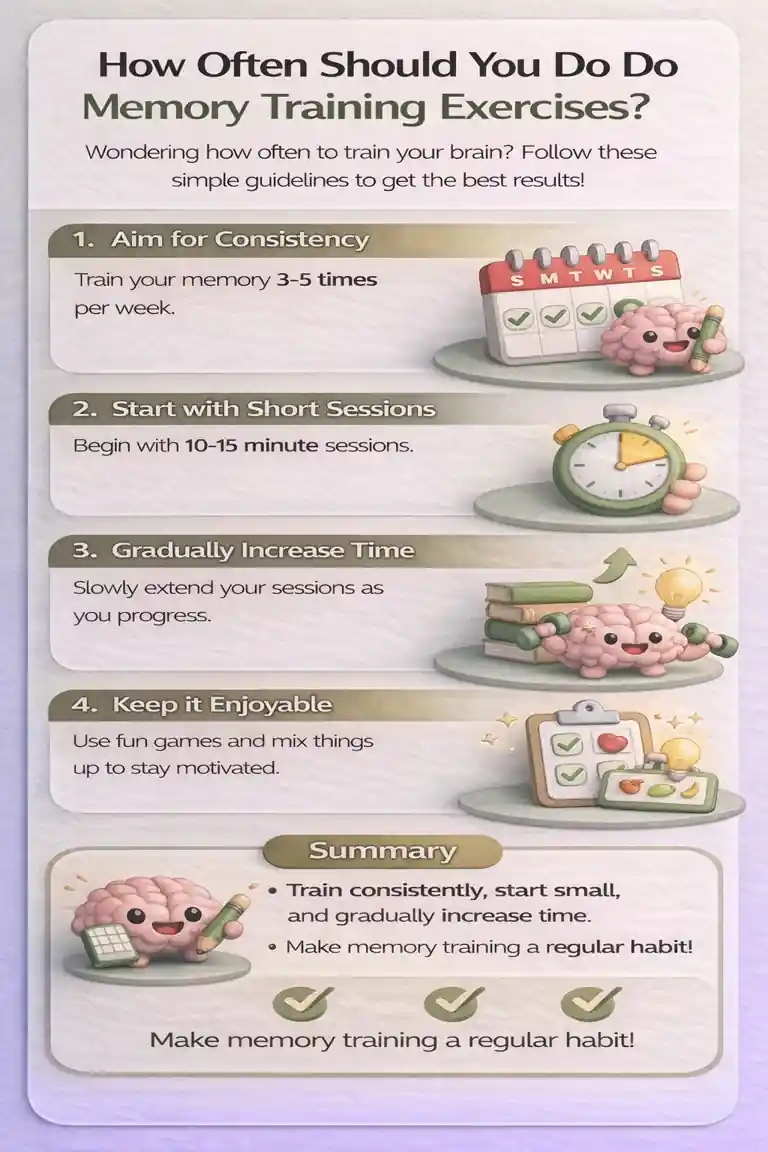
4–5 training days per week
10–15 minutes per session
1–2 rest days to allow consolidation
Gradual difficulty increases over time
This frequency aligns with how the brain encodes and strengthens memory through repetition and recovery.
Signs You’re Training Too Much or Too Little
Training frequency issues often show up as:
Too little training
Forgetting exercises between sessions
No noticeable improvement after weeks
Difficulty staying focused
Too much training
Mental fatigue
Reduced motivation
Slower recall despite more effort
The best progress occurs when training feels challenging—but not exhausting.
Adjusting Frequency Based on Your Goals
Different goals require slightly different pacing:
Memory maintenance: 3–4 short sessions per week
Active improvement: 4–5 focused sessions per week
High-demand learning periods: Short daily sessions with rest days
Listening to mental fatigue and performance changes helps fine-tune frequency, ensuring spatial recognition training remains effective without overloading the brain.
“The biggest gains from brain training don’t come from doing more exercises—they come from training with intention. When mental challenges are realistic, repeatable, and practiced consistently, improvement becomes something you can actually feel in everyday thinking.”
Essential Resources on Brain Training Exercises
How physical activity reinforces brain training success
CDC — Physical Activity Boosts Brain Health
Movement supports memory and thinking skills by improving blood flow and brain function. This resource explains how physical activity strengthens cognitive performance alongside brain training.
https://www.cdc.gov/physical-activity/features/boost-brain-health.html
Government-backed insight into memory and thinking skills
NIH / National Institute on Aging — Memory and Cognitive Health
A trusted overview of how memory works, how it changes over time, and which habits are supported by research to protect cognitive health.
https://www.nia.nih.gov/health/topics/memory-and-cognitive-health
Actionable cognitive health guidance for adults
National Institute on Aging — Cognitive Health and Older Adults
Practical, evidence-based activities and habits that help adults maintain memory, attention, and overall brain health as they age.
https://www.nia.nih.gov/health/brain-health/cognitive-health-and-older-adults
Expert perspectives on cognitive training methods
NIA — Cognitive Training Webinar Series
In-depth discussions from researchers explaining how cognitive training works, what shows promise, and where common misconceptions arise.
https://www.nia.nih.gov/research/dbsr/workshops/cognitive-training-webinar-series
Educational toolkits for brain health and aging
NIA — Healthy Aging and Dementia Toolkits
Free educational materials designed to support brain health awareness, memory care, and healthy aging practices.
https://www.nia.nih.gov/toolkits
Practical brain exercise ideas for daily use
Penn State Health — Brain Exercises to Improve Memory and Cognition
A practical collection of mental exercises and activities that support memory, creativity, and cognitive flexibility in everyday life.
https://prowellness.childrens.pennstatehealth.org/22-brain-exercises-to-improve-memory-cognition-and-creativity/
Research-backed cognitive strategy training
Center for BrainHealth — Cognitive Training Research
Explores structured cognitive strategies with measurable effects on memory, attention, and real-world mental performance.
https://centerforbrainhealth.org/science/cognitive-training
These resources show that effective brain training is most successful when it combines movement, evidence-based cognitive strategies, and daily practice, reinforcing why a focused 7 minutes brain warm up can support memory, attention, and overall cognitive health when used consistently.
Supporting Statistics
Over 6 million Americans live with Alzheimer’s, highlighting the need for consistent memory-support habits
1 in 9 adults age 65+ is projected to have Alzheimer’s dementia in 2025
The National Institute on Aging has reviewed 200+ cognitive training trials, many focused on training schedules
Dementia-related costs are projected to exceed $380 billion in 2025, reinforcing prevention-focused strategies
Sources:
https://www.nia.nih.gov
https://www.alz.org
Final Thought & Opinion
Brain training works best when it becomes a habit, not a shortcut.
Key insights from research and real-world use:
Consistent practice drives real improvement
Simple, targeted exercises outperform complex routines
Movement and recovery support cognitive gains
What experience consistently shows:
Brain training should mirror daily mental demands
Intention matters more than volume
Progress shows up in focus, recall, and clarity—not just scores
When brain training is evidence-based and integrated into everyday life, it becomes a practical tool for long-term cognitive health rather than a passing trend.
Next Steps
Turn insight into action with a simple plan.
Set one goal
Memory, focus, or mental clarity.Pick 2–3 proven exercises
Focus on recall and problem-solving.Train consistently
10–15 minutes, 4–5 days per week.Add movement
Support brain health with physical activity.Increase difficulty slowly
Adjust as exercises get easier.Apply skills daily
Use memory in real-life situations.Track progress
Watch for improvements in focus and recall.
This structured, goal-driven plan mirrors how educational consultants support cognitive development by clarifying goals, recommending proven exercises, reinforcing consistent practice, and guiding learners to apply memory and focus skills in real-life situations for measurable improvement.
FAQ on Brain Training Exercises
Q: What are brain training exercises?
A: Intentional mental challenges that improve memory, focus, and adaptability.
Q: Do brain training exercises work?
A: Yes, when they involve effort, recall, and problem-solving. Passive tasks show limited results.
Q: How often should brain training be done?
A:
10–15 minutes per session
Several times per week
Q: Are apps required for brain training?
A: No. Many effective exercises are applied directly to real-life situations.
Q: Who benefits most from brain training?
A: Those who practice consistently and apply skills beyond the exercises.